



Floral Design Is an Art. And Nature Wrote the Framework.
On color harmonies, pattern recognition, and the honor of teaching this at the Virginia Museum of Fine Arts.
I want to tell you about something that still doesn’t feel entirely real.
On Thursday, October 8, I’m speaking at the Virginia Museum of Fine Arts as a guest speaker for Fine Arts & Flowers.
Fine Arts & Flowers is a museum-wide exhibition where floral designers interpret works from VMFA’s permanent collection. It’s been held every other year since 1987, organized by The Council of VMFA, and it fills the galleries with arrangements built in conversation with the art they stand beside. This year’s speaker series theme is “Cultivating Beautiful Spaces.”
VMFA is the 11th top art museum in the country and is one of the largest comprehensive art museums in North America. It holds over 50,000 works spanning 6,000 years, including the largest public collection of Fabergé eggs outside of Russia and an acclaimed collection of art nouveau and art deco objects. A personal favorite of mine!
I’ve been teaching for many years and I’ve spoken at conferences and taught workshops all over the country but being invited to present at this wonderful event and institution is a career highlight.
Why a fine art museum is exactly the right room for this
Walk through VMFA and you are surrounded by mastery. Proportion, color, scale, rhythm, all of it handled by people who spent their lives learning to handle it.
The reason any of that work compels you, the reason you stop in front of one painting and walk past another, is that the artist observed nature’s patterns and got them right.
The golden ratio. Balance. Repetition. Contrast.
What makes art good is the extraction of nature’s principles.
That’s true of a Renaissance portrait and it’s true of a bouquet on your kitchen table.
Same forces. Different mediums.
Which is why it means so much to be invited into a building that honors the place where magic and science meet.
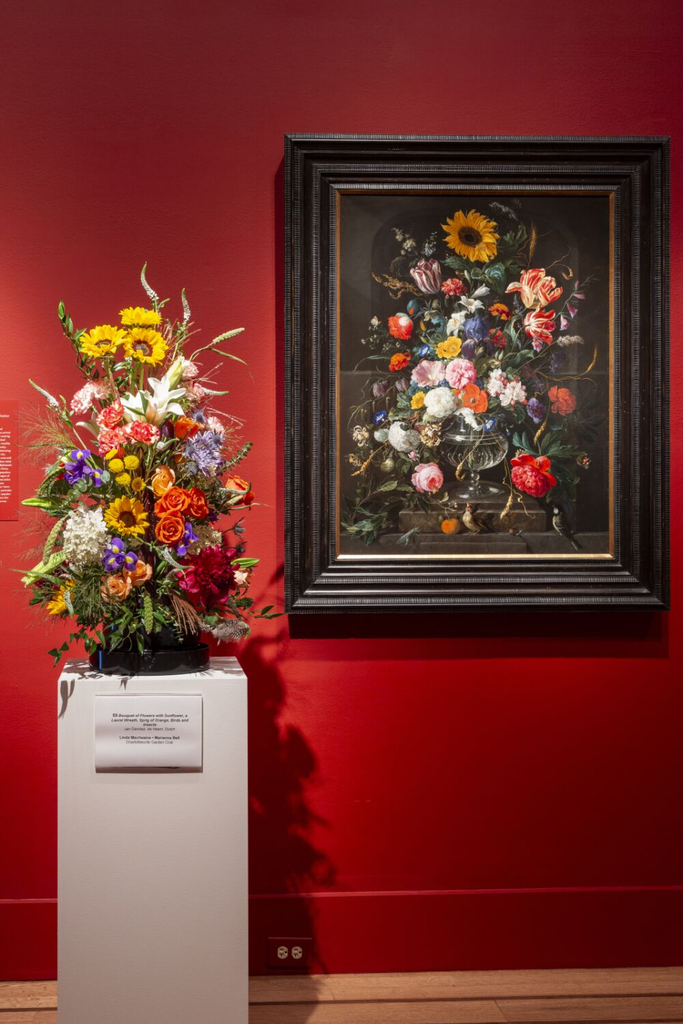
Floral design is often relegated to a commodity but this event is a reminder that flowers are a true masterpiece in themselves and the work we do them is also a true art. A museum understands that it’s a discipline governed by the same laws as everything hanging on its walls.

Fine Arts & Flowers | Guest Speaker Amy Balsters
Thursday, October 8, 10 to 11 am Cheek Theater, VMFA, Richmond General admission $50
Reserve your seat →
Proceeds from Fine Arts & Flowers special events support VMFA’s expansion and renovation.
You do not need mastery to make something beautiful
This talk is for anyone who loves art, flowers, floral design and especially color.
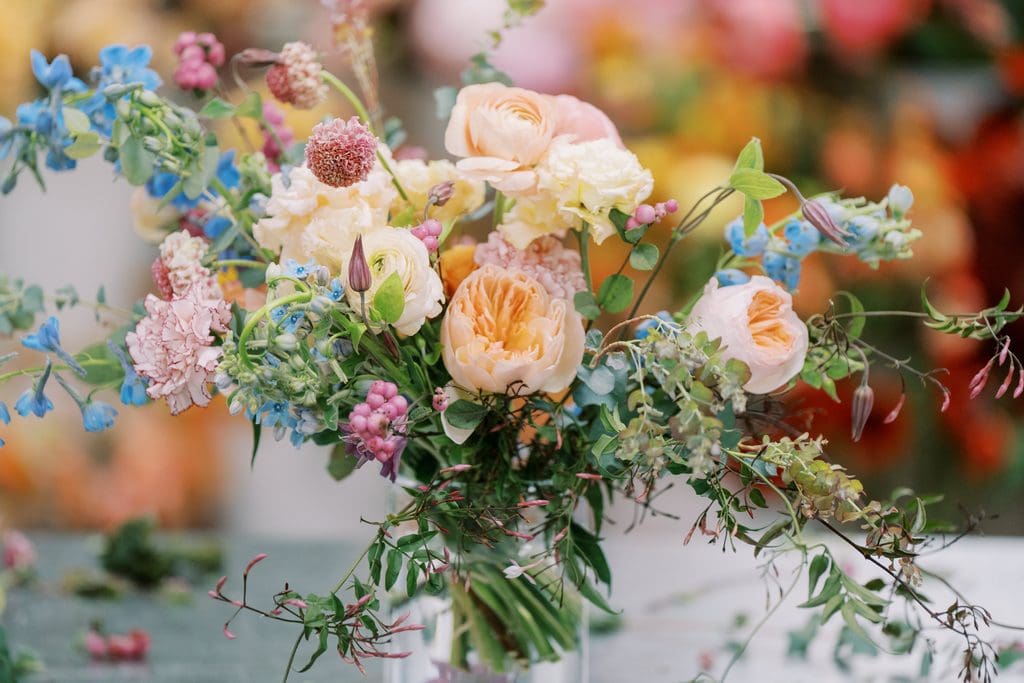
If you want some tangible tips and techniques for how to use color theory to make beautiful floral designs, this is for you.
If you arrange what you cut from your own garden.
If you buy a bunch at the market on Saturday and want it to look put together.
If you’re an art lover who has never held floral shears and just wants to understand why certain combinations move you.
I have a lot to share with you over the one hour presentation.
We will be exploring how color harmonies work in floral design (the “rules” change a bit when working with a living product) so let me guide you through my approach.

Together, we will examine a handful of harmonies that have consistently provided beautiful results. That’s all a color harmony is. It’s a pattern, named and organized so you can reach for it on purpose. That intentional approach is what makes all the difference when working with color.
Color harmonies are pattern recognition
This is what I’ll be teaching at VMFA, it’s one of the arms of my approach in teaching color to florists and designers. We have unique challenges with flowers as they often change in different light, vary by grower, shift depending on their age and change depending on what they are sitting next to.
Although color theory is complex and florists have unique challenges, I have discovered several pathways to direct my process that have allowed me to step outside of my “color comfort zone” and take more risks with color.
A color harmony is a relationship between colors that occurs in nature and that our eyes have been trained by nature to find satisfying. When you use one, you’re not inventing a palette from nothing. You’re borrowing a pattern that already works and applying flowers to it.
And it answers the question that is most often answered: what actually goes together?
Here’s a taste of what I will be demoing at VMFA.
Monochromatic
It’s tempting to think monochromatic is easy and basic. One color. Done.
But there is a complexity to making successful monochromatic designs shine.
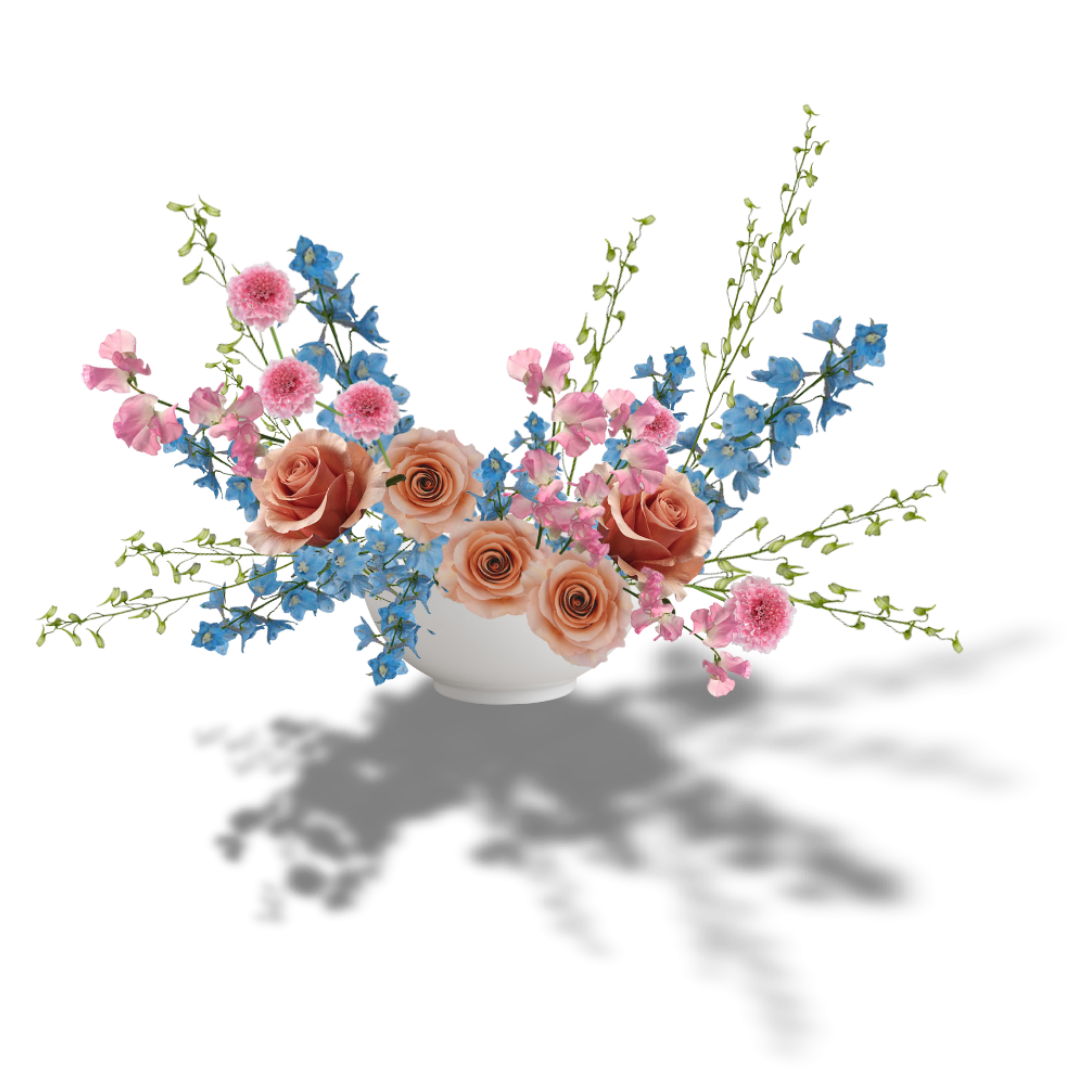
First, the hue is allowed to drift. A monochromatic arrangement built from one flat, identical color can feel a little flat. But contrast within a monochromatic palette can be enlivened with variation through hue, value and saturation. Some blooms darker, some lighter and more pale, some more intense, all living in the same family. Hues can stretch a bit in a monochromatic design due to the multiple hues in individual flowers.
Second, the vessel is part of the palette. Not a stand it sits on. This is often missed when there is a strong focus on the flowers but color drenching proves how impactful this is. When the vessel, and supporting elements carry the same color story as the flowers, the whole design reads as one object instead of flowers plus a vase. That single shift makes an arrangement look considered rather than assembled.
Complementary
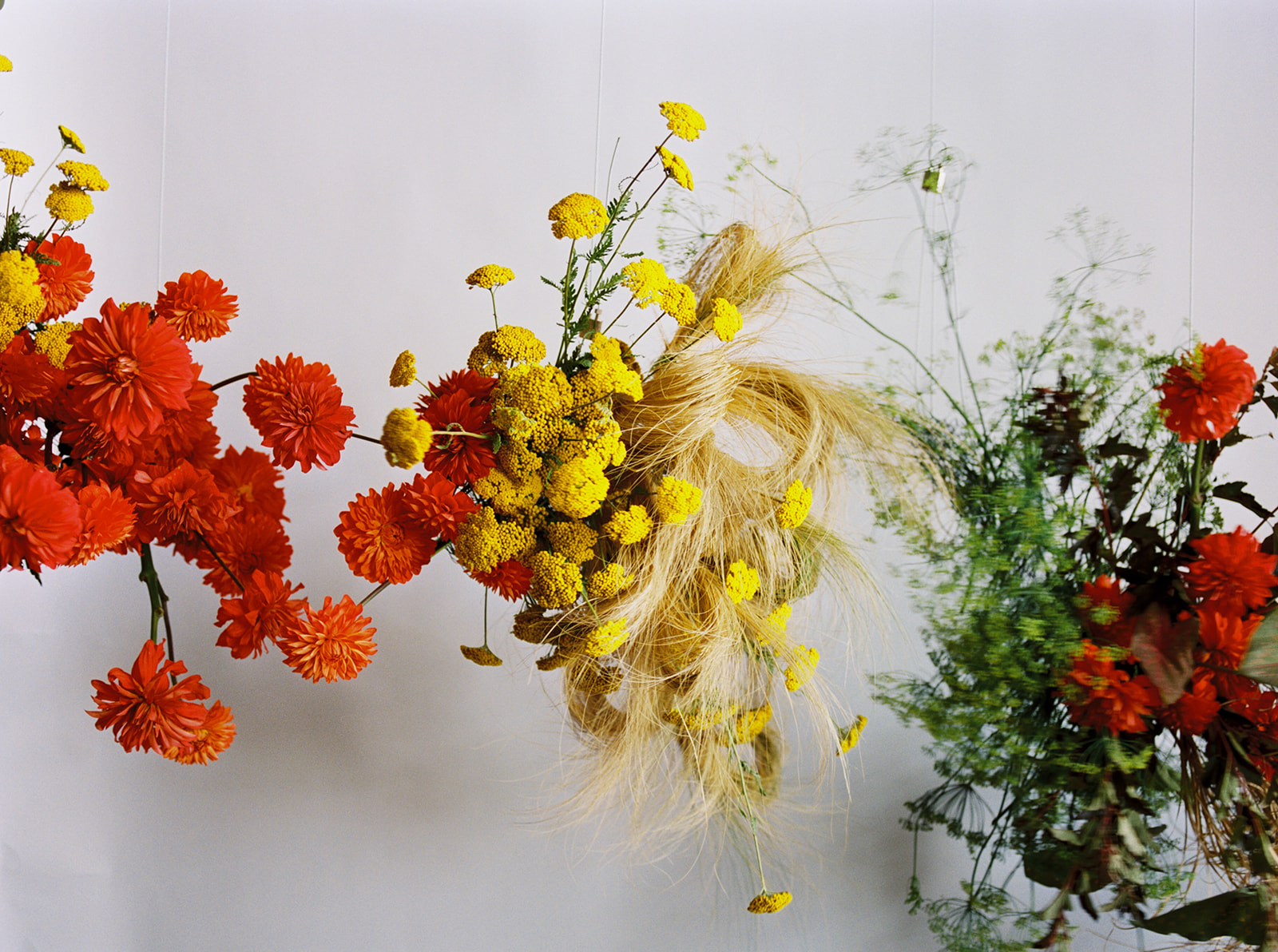
Opposites on the color wheel. Immediate tension and contrast.
Often this one falls apart at the execution is where it falls apart because most people treat complementary as an equal split. Half of this, half of that. Two colors of the same intensity, in the same amount, fighting for your attention.
What I consider: hue, then saturation, then temperature, then value.
And then I decide which one is dominant, because one of them has to be. The moment you stop giving them equal weight, a complementary palette stops shouting and starts working. It’s ALL about proportion when it comes to color and I want to explore this with you on October 8th.
Why flowers make this all harder.
This is the part I love most about our medium as florists, and it’s the part I most want an audience of art lovers to understand.
A painter mixes the color they want. A graphic artist adjusts the levers on a screen. But as florists, we have none of those options.
We work with nature’s palette. It is written for us and we have to make it work.
We blend our elements visually rather than on a screen or painters palette and have dozens of individual perishable pieces that each carry their own hue and value and temperature.
But it’s what makes the work thrilling. The material is alive and leaving.
This is what I look forward to exploring and talking through on October 8th at Fine Arts & Flowers.
What we’re doing on October 8
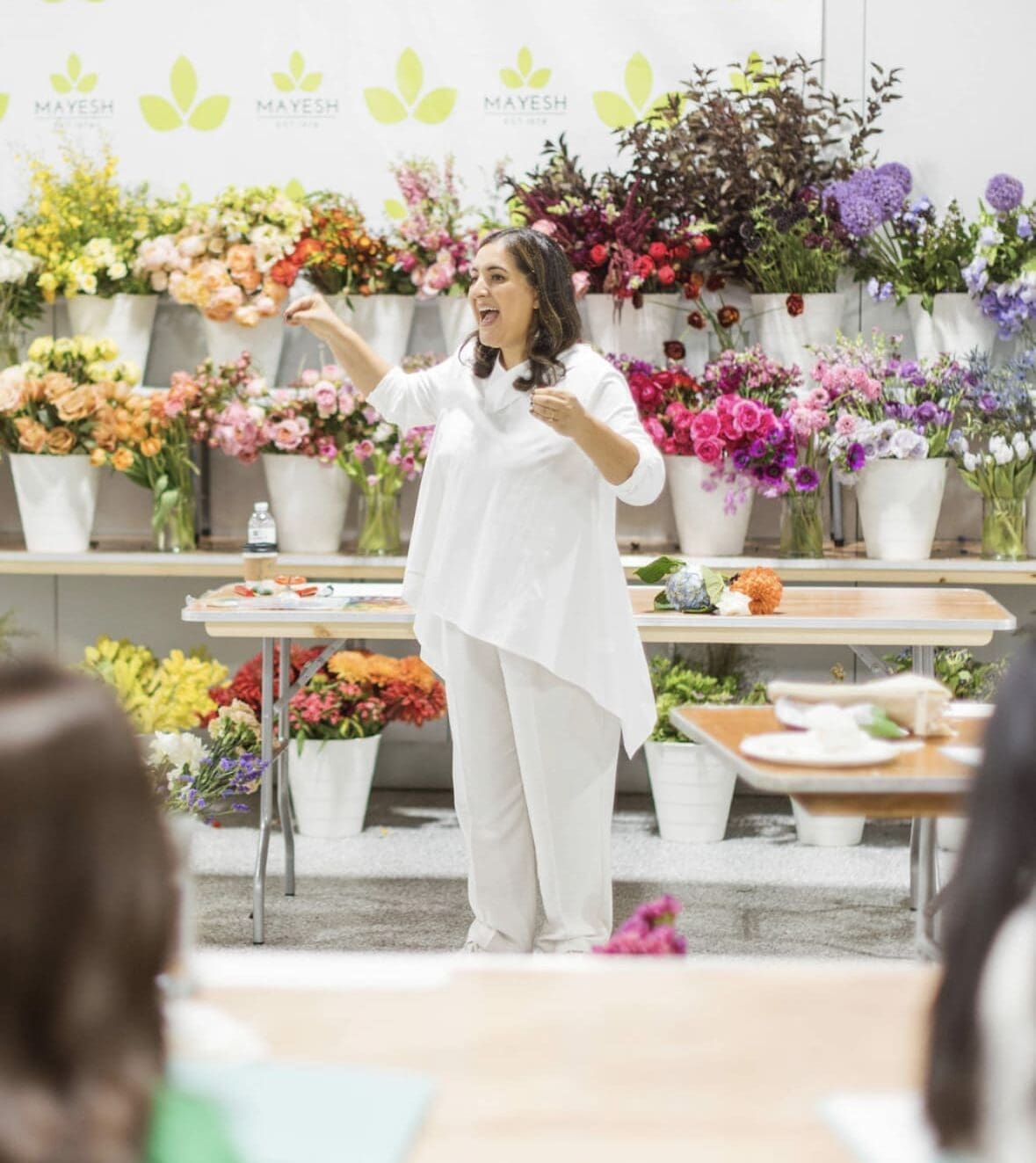
An hour, in the Cheek Theater, on the intersection of color theory and palette design.
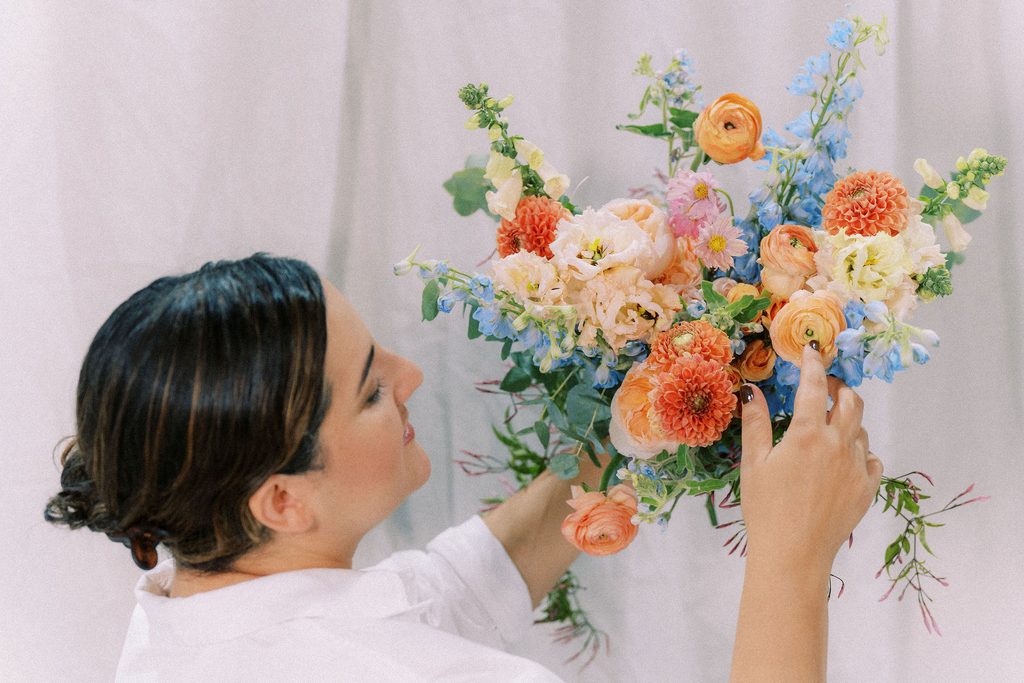
I will demonstrate mechanics, design principles, some current design trends and most importantly, how to use color harmonies to incite new inspiration into your work with flowers, no matter how you work with them.
You will see a breadth of work to learn from and here detailed tips and ideas to apply for yourself.
As an added bonus, my long term favorite vessel company, Accent Decor, is a vase sponsor and is providing all the beautiful containers. Each design will be raffled off at the end of the presentation so you may walk away with a design to take home.
Join me for this inspirational event that celebrates Art and Flowers, all in one uniquely inspiring place.
Fine Arts & Flowers | Guest Speaker Amy Balsters Thursday, October 8, 10 to 11 am Cheek Theater, VMFA, 200 N Arthur Ashe Boulevard, Richmond, VA General admission $50
Get your ticket →
The exhibition itself runs October 8 through 11 and admission to the galleries is free, so if you’re traveling in, make a day of it. Come see how other designers interpreted the collection, then come sit with us for an hour.
Come see it live. Fine Arts & Flowers at VMFA → Thursday, October 8, 10 am, Cheek Theater. $50.
Go deeper on color. Color Theory Confidence → is the full online course of color theory for florists.
